Miscellaneous Writings, and Thoughts of The Day

Finding The Sacred In Nature

Finding the Sacred In Nature

By Rick Theile

In the absence of the sacred, nothing is sacred—everything is for sale.”

~Oren Lyons

What do I mean when I say, “Finding the sacred in Nature”? It is an experience few know and, some want to know, but don’t know how to experience it. They look or search for this sacredness outwardly while in Nature, instead of looking inwardly, within the silent, invisible self. They hope Nature will provide them with her secrets, providing them with knowledge and understanding of why they are here, and their purpose in life. Finding the sacred in Nature is the experience of being one with Nature—having a deep connection and reverence for what Nature is. It is this connection with all life and its magical wonders and beauty that cannot be explained, only experienced in oneness with all things.

Experiencing the sacred does not have to be in Nature, it can be done anywhere. But Nature can be the perfect teacher, if we are willing to tune in and listen in silence, and by being in the present moment.

The late Dr. Wayne Dyer reminds us of the amazing wonders of Nature in these two lines:

“A little seedling has treeness in it when it is put into the ground.

You can’t see treeness, you can’t see the tree. Yet you know it is in there.”

Growing up I lived in the relatively small City of San Leandro (a population of 29,000), that connects to the metropolitan City of Oakland to the north, the city of Hayward to the south, the San Francisco Bay to the west, and the East Bay foothills to the east. In our youth, my (slightly) older brother and our friends would spend many adventures in the foothills, only a couple of blocks away from our house. I would come home with poison oak too many times to count. Although I dreaded this affliction, it never stopped me from going into Nature.

From the beginning, I was highly influenced by watching television shows like Davy Crockett, Daniel Boone, and other westerns, and in the movie theaters, watching movies that were related to the outdoors and anything Nature—always dreaming about living in Nature. As a young boy, and as an adult, I was active in the outdoors, doing things like horseback riding, camping, hunting, fishing, rafting, canoeing, skin diving, scuba diving, and backpacking. At age 18, I got my private pilot’s license. For a time, I owned horses that changed my life, and I developed a special relationship with those incredible animals.

Some things I did not learn from my adventures being in Nature was the concept and understanding of our relationship with Nature and having a respect for Nature, or the idea of the oneness with Nature—with all life. This idea of being Sacred was an unknown concept in our culture, for most Americans. No one taught us at home or in the schools to respect Nature. It was not being shown on television nor talked about in our government with the exception of the Smoky the Bear’s slogan, “Only You Can Prevent Forest Fires.”

It would be much later that I would discover individuals like John Muir, Henry David Thoreau, John James Audubon, David Suzuki, David Attenborough, and other Naturalists paved the way towards influencing me, and others, in our understanding of the natural world. I began gaining knowledge that Nature was more than just something to be used for the benefit of mankind—Nature being a living entity—the natural world being life that sustains all life. Artist’s paintings of Nature and Nature photographers, such as Ansel Adams influenced my appreciation of the stunning beauty of our natural surroundings.

It is sad to say, that the Native Peoples of North America were not, and should have been, a part of this influence in our relationship with Nature. We have chosen to ignore their very existence due to ignorance, and hatred of these first peoples.

When we had lost this connection with the natural world many centuries ago, the indigenous peoples of the lands were still living it in their traditional ways. During the period of the colonization of European settlers to America, these newcomers eventually banned such practices by the native people of their traditional ways of life in an attempt to destroy these cultures. These original peoples were part of the land—it was a place where their ancestors resided, it was a place they had a spiritual connection with. They had a deep respect and connection with all life around them. Their attempts to hold on to their traditions and ways of life became nearly impossible with the devastating impact the European Colonists had on them, through the genocide, forced removal from their lands, forced assimilation and horrific atrocities perpetrated against these peoples. For the most part, these indigenous peoples were not considered essential sources for the understanding of Nature—they were deemed to be inhuman savages—even unworthy of life itself by many—they were expendable. But on the contrary, they had a far better understanding of the natural world than most non-natives as they still do today.

We once were all indigenous to a land, and lived in a very primitive way—we depended on Nature to sustain us. Nature is in all of us, but most have forgotten this relationship, choosing ownership of land, choosing to conquer and control the natural world, choosing materialism over Nature, choosing consumerism over Nature. Knowingly or unknowingly or out of ignorance, we have become enemies of the natural world, destroying our own planet earth for the sake of progress. This place we call home may become uninhabitable to many life forms through our thoughtlessness to our planet and to all life. If we don’t act immediately on how we see and understand our role we must play, and the responsibility we have to the planet, we will likely suffer the consequences of our actions.

In today’s civilization, we have been consumed by, and lost our souls in consumerism and materialistic mentality, drawing us further and further away from the truth of our real dependence on the natural world. We continue to strip natural resources from the land without considering the consequences of our actions. Overpopulation is putting tremendous stress on our world, with an estimate of 9 billion people inhabiting our small planet by 2050. We continue to allow industry and corporations to pollute our air, water, and land with dangerous toxins impacting the health and safety to humans, animals, plants and trees—basically all life on our planet. We continue fighting wars that are not only devastating to human life, but to all life. And now, we are facing climate change that will most likely impact life as we know it for all time.

We need to relearn these valuable lessons concerning our relationship with Nature and the respect that should be given to all life we share the planet with—about life and our dependence on the Earth. We have forgotten our teaching from our ancestors from long ago. But there is still hope.

As Chief Oren Lyons tells us during an interview,

“…And to Learn you have to have teachers. And who is your teacher? And the teacher is Nature, the Earth. You learn, you learn, and you learn how to get along. You learn how to be respectful. And so, from what I see and from what I know in my travels, it is the indigenous people, have about the best understanding of this. And I would say, that is probably the biggest loss I see in Humanity now, is loss

of understanding, of relationship. They don’t understand the relationship. How do you polish it, how do you keep it fresh?”…

Oren Lyons continues to talk about doing this with ceremonies, with prayer, with dance and song (Lyons is referring to these practices by indigenous peoples). He then continues,

“…Most important here is understanding how closely we are related to the Earth, and that we are part of the Earth, and we’re part of Nature. Nature is us, basically. We always talk about environment, something like, it is over there, or it is a category or something. No, we are in the middle of it, we affect it, we survive in it. We are part of the Earth. Once people understand that, that would be very helpful because they would be more careful about things. And so the question of recognizing where we are and who we are, why we call the Earth our Mother, is simple, because of respect. Everybody respects the Mother…”

To be clear, I am not saying we should take rituals, ceremonies, prayers, dances, and songs from the traditional native cultures, but indigenous peoples can provide guidance about the beliefs and principles behind those rituals and ceremonies.

Getting non-natives to understand this relationship to Nature, to respect her, to show reverence to her as the traditional indigenous peoples continue to do, can be difficult in our materialistic and synthetic world. Especially when we see Nature as a place to conquer, to overcome its power over us, to see her as our ultimate playground, a place for recreation, or merely an object to exploit. This also applies to sites or areas considered Sacred by a Native Peoples for thousands of years.

It took me a long time to learn this idea of Nature being sacred. When I began reading about Native Americans and other indigenous cultures, these concepts began flowing in my consciousness, and slowly I began seeing this sacredness in Nature and in all life. I began sensing this sacredness when I was in Hawai’i and through the Hawaiian Native people and their rich and beautiful culture.

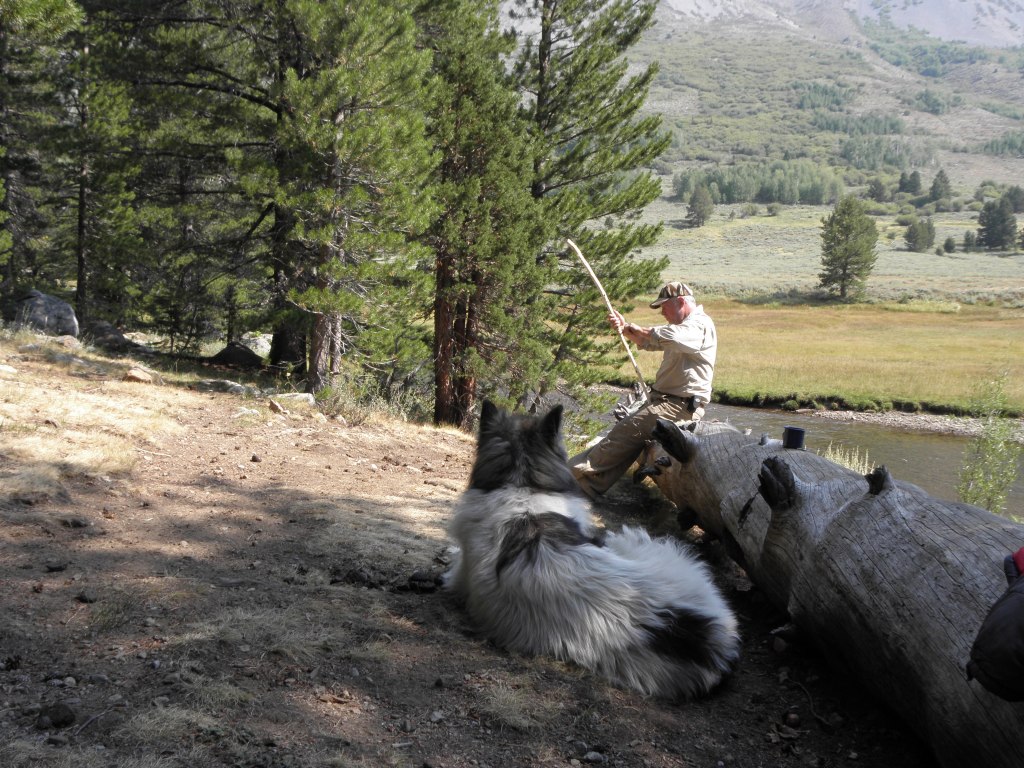
When I first experienced a deepened awareness in Nature when my dog Shiloh and I went into the wilderness alone back in 2009. Our first trip was in the first part of June, and we had spent seven days at Kennedy Lake in the Emigrant Wilderness, California. This experience was the first run at being alone, and I went through a learning curve and the adjustments required with being alone. I was floundering through this experience but saw it as a learning experience of trial and error. And once I began asking, “what are the lessons I can learn from this experience?” The answers appeared, and I was able to focus on the planning of my next trip in the wilderness.

We left for our next trip at the end of August. Once again our destination was to Kennedy Lake for a three week stay. I had a friend come with us for the first six days, and after she had left, Shiloh and I would spend eighteen days alone. Our experience there felt more natural since it was a familiar place to us, but in the back of my mind, I was questioning myself if I could do it alone for the full eighteen days.

Throughout those eighteen days, Shiloh and I explored this small alpine valley, with the small lake lying at the southern end, a calming stream lazily meandering through the boggy meadow, and steep mountains surrounding us in every direction giving the area a majestic feeling of immense proportions. It was our garden of paradise. Most of the time we were there, we were utterly alone, giving us a sense of peace, quietness, and solitude.

Close to camp there was a spring at the northern end of the meadow (one of many in the area), where we gathered our drinking water that was. It was a short walk from our camp, and I never minded the peaceful walk once or sometimes twice a day with Shiloh by my side. On some afternoons, I would fill the water containers and then Shiloh and I would just sit on the wet grass next to the spring that overlooked the beautiful lush green meadow, the lake in the distance, mirroring the reflections of the nearby mountains, and the mountain peaks stretching high into the sky. I experienced with quiet observation and the awareness of our place in Nature. In these moments, I experienced Nature and connected with her at a deep level than I ever had before—I was touched by her in a very profound way. I remember saying to Shiloh, “We are Home.” On one occasion sitting by the spring, Shiloh and I were visited by a Ground Squirrel, and all three of us enjoyed those moments together. Shiloh usually chases these critters, but not today.

I have to attribute this awareness with Nature, a connectedness with the natural world, to my studies in bushcraft and survival skills. I have also gained a better understanding and relationship with Nature through the Native American’s and First Nations of Canada’s knowledge and relationship they have with Nature. These native cultures had taught me to show respect, and reverence with Nature and to all life. I began seeing Nature as a living, breathing Being—a source of all life on our planet and beyond. My relationship with Nature became more than a thing to use for my benefit or enjoyment, it was living organisms to be respected and shown reverence to. While learning more about the many indigenous cultures in the world and their relationship with Nature (with Mother Earth), I began understanding and feeling the special sacredness of our planet and the universe.

When most of us are in Nature or backpacking in the wild, we tend to bring our mental baggage, and the presence of companions provides us few moments, if any, to really be in and experience Nature’s wonders. We see, but don’t see, we hear, but don’t hear, we smell, but don’t smell, we touch but don’t touch, and we may taste, but don’t taste. What I mean by this is that we don’t experience Nature, we are not in tune with the present moment, and are not truly aware of what is all around us. Our minds are consumed with thoughts we should have left at home, more than the experience of Being in Nature.

It is unfortunate that only a few non-natives have discovered this truth. Most still see Nature as a place for recreation, a place to conquer, or worse, a place to exploit natural resources for profit. It is slowly getting better with more non-natives seeing Nature as a sacred Being and how they understand and define their definition as being sacred. Does it align with how Native people see it? Probably not. This is why I believe we can learn so much from native peoples and their relationship with Nature.

I am deeply concerned about the damage being done to our planet; the raping, pillaging, polluting of the air, water, and land by our governments and large corporations, and now the effects of climate change caused by all major industrialized countries. Will we change how we see, think, and relate to our Mother Earth before it is too late?

I believe we must begin to change our paradigm with how we relate to our only home. This does not simply mean going totally green and renewable, although that would make a difference. This means seeing all life as sacred, and having a deep respect and reverence for Nature. Since the modern-day world has been so disconnected from the natural world for so long, we must gain that wisdom and knowledge from indigenous peoples who still live their traditional ways. This is not to say the indigenous people need to share their sacred rituals, dances, songs and ceremonies to the seekers of this wisdom in relating to the land. This would create a whole set of new problems with non-natives copying these practices that native peoples have been doing for thousands of years, with no understanding of the purpose or reason why. The seeker must find their own way and understanding of the sacred through their own experiences in Nature, and I believe, learning and understanding the relationship indigenous peoples have with Nature can help one on their spiritual path and developing a deeper understanding and connection with Nature.

Not long ago I was watching the movie, The Day The Earth Stood Still (the 2008 version). Keanu Reeves portrays Klaatu, the extraterrestrialvisitor who came to save the Earth from the human species. The female scientist who developed a relationship with the alien asked him why did he come? What was his purpose? His response was “This planet is dying; the human race is killing it. If the Earth dies, you die. If you (the human race) die, the Earth survives.” Another line from a fellow alien who had lived on Earth for 70 years, told Klaatu, “This is hostile territory. I’m afraid they are not a reasonable race… Any attempt to intercede with them would be futile. They are destructive, and won’t change…”

This is something we need to think about as a people and stewards of our planet if we want to survive this madness and destruction we have created.

I have been writing about this for some time now, trying to get people to rethink their relationship with the Earth—our only home—and all life we share this planet with. If we continue on this destructive path, the human race will become extinct, and we will take many species of animals, and other forms of life with us. And as Klaatu said, the Earth does not need us. With the impact of climate change at our doorstep, we continue to do the same thing—we do nothing to make our planet a cleaner and healthier place to live for all life. Either way, the Earth will survive, but we may not.

We are not separate from Nature, we are part of Nature. We are the air we breathe, the water we drink, the land that gives us our foundation for life. We are the gift of life as are all the plants, trees, and animals we share our beautiful Earth with—we are all connected, all one with this sacred life force.

The simple practice of experiencing silent observation and awareness with no judgment or labeling, and spending time alone in Nature in reflection, Nature will respond by beginning to show herself to you, in her beauty, magic, and awe-inspiring wonder.

Nature is the miracles of all life,

All life is the miracles of Nature.

Be one with Nature because we are all a part of Nature.

~Rick Theile

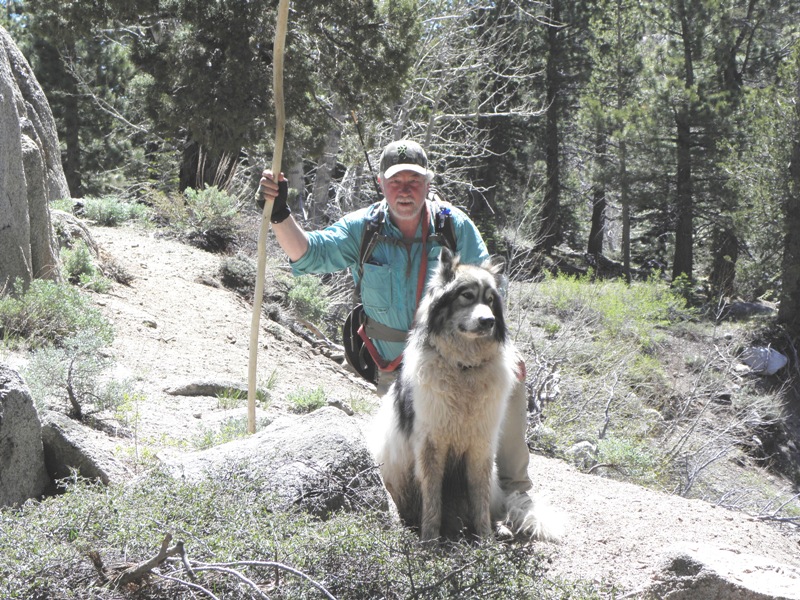
I have been living in Nature with my two dogs, Takota and Nanook (Native American Indian Dogs, or NAIDS for short) for over a year and a half in tents. We spent the winter this year in Idaho, again in a tent. In the summer months of 2018, we spent most of the time in the backcountry and wilderness areas of Idaho, enjoying the quiet solitude of Nature. We began this journey back in October of 2017 from Northern California.

Even living in Nature 24/7, from time to time I have my moments getting lost in my thoughts, taking me away from those magical experiences Nature provides to us. And I have to remind myself where I am on occasion. In this writing and my writings about my experiences with my canine companions in Nature, it helps me come back to this special place, we call our home.

In May of 2019, we are breaking our winter camp and we are headed once again to parts of beautiful Idaho, known and unknown, letting the winds take us to new adventures and experiences in Nature.
Standard
Miscellaneous Writings, and Thoughts of The Day

Walking The Silent Path Into Nature

Walking The Silent Path Into Nature

Shiloh and I begin another journey into the wilderness. We start out in the early morning with the fresh scent of pine and the coolness of the mountain air touching my skin. In the background are the sounds of the flowing river that will guide us on our walk. Its gentle course weaving through the valley floor provides us with a sense of solitude, freedom and peace of mind. On our accent, this calming river soon narrows into rocky crags churning these calm waters into a violent torrent beast swallowing up anything that gets in its way. Its origins are high in the Sierra Nevada mountains from the spring time snow melt where we have set our destination. And from the Kennedy Meadows Valley we began from, it then turns into the Stanislaus River.

Our final destination is Kennedy Lake, an eight mile hike with an accent of a thousand foot elevation taking us up to the 7,800 foot mark. The trail we walk we know like an old friend, though we have been on this trail only a couple of times. I remember my first time on the trail I had experienced a slight sense of fear of the uncertain and the unknown that followed my every step, due to the fact this would be the first time experiencing the wilderness alone. Shiloh walks ahead of me with confidence with his nose to the ground picking up all those familiar scents he had experienced from our past walks on this trail. His excitement peaked knowing we would once again be living in the wilderness. And for me, being back, experiencing nature with Shiloh was always a special time to share those wonderful experiences with. The wilderness was a place Shiloh and I soon fell in love with and happily called our home.

This journey we have shared together in the wilderness has become a spiritual journey for me and I always felt a sense of the sacred all around me. I had a sense of belonging in the magical wonder of nature and sharing it with my best friend and wilderness companion, Shiloh. Whether we walked alone or with a friend joining us, it was always a journey with Shiloh. The friend that joined us became just a shadow of our existence together in the mountains.

The trail we walk on has many stories it could tell if only it could speak of its past. The many hidden footprints of hikers, backpackers, fishermen, hunters, people on horseback, the workers and mule trains carrying supplies and equipment that built the Relief Reservoir, the lost footprints of the pioneers that explored these lands and of course the lost footprints of the ancient people who once lived here for thousands of years prior to the white man’s arrival. I wonder how many people think of these things while making their own story on this trail. How many of us think about the original people who once called this area their home and then were driven from their home by the white man and almost totally exterminated for just being there? How many Indian spirits still walk this trail, shedding tears of what was once a thriving community of Indian tribes who loved this land and their way of life living with nature and being part of that flow of life? In the central Sierra Nevada Mountains such Indian tribes as the Sierra Miwok, the Mono, the Mountain Maidu, the Washoe and on occasion the Northern Paiutes made their seasonal homes here or visited for hunting and gathering food and/ or trading with other tribes.

While sitting in camp at Kennedy Lake viewing the alpine meadow and surrounding rocky mountain peaks or taking walks in the small valley, I would imagine what it was like with the presence of Indian people living here. Camping here as Shiloh and I are doing, living with nature, living off the land for sustenance, hunting, fishing, foraging and gathering wild edible plants for food and plants for medicines – each person working in their role within the community, working together in a cohesive manner for the benefit of the whole tribe and for their survival.

The Indian tribes who visited these areas knew them intimately. They knew when and where the animals would be, their habits and behaviors, they would know when to find and pick wild edible plants for food and plants for medicine. They would have this incredible connection with their surroundings that few of us today could even imagine having. Most weekend campers today only see a small glimpse of what is around them in nature. They are usually there to use her rather than connect with her. Most don’t see nature as sacred thus having very little or no respect for nature – Mother Earth. On the other hand, the Indian People had a high reverence with nature, a deep connection and respect for all living things. Nature and all life were sacred to them. They lived in harmony and balance with nature because they understood this to be necessary for their own survival and their responsibility to the Creator for providing the sustenance needed for their survival. They viewed the animals, insects, plants, trees and even the rocks as relations. They understood that the land, water and air were vital and necessary natural resources for all life and again these resources were sacred. The whole of the Indian communities were to celebrate life in every part of their lives through storytelling, song, dance, ceremonies, language and culture. With all these things, they had a sacred relationship with. What type of world would it be if we all lived this way? It would definitely be a much healthier place to live on a physical, emotional and spiritual level.

The more I view into and experience this vastness of the natural world; I begin to feel the sacredness of all life and my reverence for all life on our planet. In a big part, I have to thank the indigenous cultures around the world for teaching me and sharing with me, their knowledge and wisdom on our relationship with Mother Earth.

It is very unfortunate that most have forgotten this connection and relationship with the natural world. We have chosen to live in a synthetic lifestyle, completely removed from the natural world where the consumption of stuff is more important than a healthy planet and with little concern for other life we share our home with. Nothing is sacred, but our need to make money and to spend it on useless things. These things do not give us a sense of being but rather makes our lives more meaningless. We have become a modern culture of people that intentionally and unintentionally destroys people’s lives and cultures who choose to still live in their traditional ways that are closely tied to the natural world. We call them primitive and uncivilized because they choose to live as their ancestors have lived for thousands of years. We have become so far removed from the natural world, we see traditional indigenous cultures as strange while we live in a world that continues to destroy and poison our planet with the very meaningless things we consume. Things that are not natural take on more of an importance than life itself in our modern world. To me this is very sad that we could even reach such a moment in time to simply ignore the destruction we are doing to our planet.

In the Lakota tradition they have the teachings of The Red Road and The Black Road through stories that convey the respect and reverence for life. It exemplifies the spiritual understanding that all life is part of the unified, interrelated web and that each part is precious and necessary to the whole. I would like to share with you what Thunder Horse has written in part on this subject:

There are many roads in life, but there are two that are important; the Red Road and the Black Road. They represent good and bad in every one’s life. It’s the two choices people have to make frequently in life. The Red Road is the good way, the good side, and the right choice. It is a road that is difficult with dangers and obstacles that are hard to travel on. The Black Road is the bad way, the bad side, and the wrong choice. The Black Road is wide and easy to travel. The Red Road and the Black Road appear in our lives not as roads but as the personifications of right and wrong, good and bad, light and dark.

Truth is the marker along the roads we travel in life. The Red Road has many markers. If you choose the Black Road, there is only the illusion of truth. We can be influenced by the truth or by illusion. Sometimes truth is like the wind.  You cannot see it, but you can see the effect it has. Truth is also like the sunrise and sunset. We see the sun come up over the eastern horizon in the morning and then disappear behind the western horizon in the evening.  From the perspective of our existence on a spinning globe, the sun appears to “rise” and “set.” In reality the sun does neither. Living a humble and giving life keeps one on the path of the Red Road.”

The reason I have written this is because I believe we are now standing on the edge of the cliff of humanity ready to jump for the sake of filling our personal needs with empty and meaningless materialism and because of this need, we are dramatically impacting the health and sustainability of our planet. The voices of cultures that still live close to the land – to Mother Earth, are telling us, we must change our ways, we must begin to respect Mother Earth and once again live by her truths. I cannot convey in my words the wisdom and teachings of the North American Indians – the Native Americans of the United States and the First Nations of Canada, so I encourage you to learn more about what they can teach us so we can begin to heal our planet and regain a spiritual connection with all life.

Standard
Miscellaneous Writings, and Thoughts of The Day

Living In The Woods

Living In The Woods

When our home is in the woods, we gain a deep intimacy and reverence for her. She provides everything we need to survive and live. While in the woods you are always looking, observing, listening, smelling and tasting. You find that you are always looking for the best firewood, you develop a close relationship with all life around you, in the plants, and the trees. You learn what animals live with you, their habits, behaviors and the signs they leave. You are always looking for clean sources of water to drink, you become in tune with all that is around you. The trees become your friends because they can provide you with so many things such as fire wood, food, medicinal medicines, resources for clothing and for shelter. Every tree can provide a gift of life once you know them and respect them. You always find you have your head down looking for nature’s gems, the plant life that can provide food and medicines and for the shear beauty they provide for the eyes and senses. The woods provide so much and ask for so little, she just wants a little respect. We have so much beauty and wonder all around us, but very few can see it. We have lost our ability to truly connect in a deep and profound way to the land, the sky, the oceans, lakes and rivers, to the animals, trees and plant life. In modern day life we cannot even comprehend looking back to the places our ancestors once lived—to live a simple life in the woods and going home. Nature is truly our home, and not living in the synthetic world we believe we belong.

Kennedy Lake, Emigrant Wilderness
Standard
Miscellaneous Writings, and Thoughts of The Day

What Is Our True Purpose?

What Is Our True Purpose?

What is our true purpose as humans, as individuals and as Beings (Spiritual Beings), that have been given great opportunities to do great things in our short stay on this planet? Is our purpose to take what we think we deserve without giving back? Is our purpose to ignore the less fortunate? Is our purpose to divide ourselves from other peoples and cultures because of differences? Is our purpose to trash our planet with garbage and toxins that pollute our air, our water and our land? Is our purpose to look at all life as insignificant compared to our own, thus caring little for the outcome of their habitats that they rely on or their very survival or their extinction? Or is our purpose to love, respect, honor, promote joy in the world? Is our purpose to live in harmony with all people and to all cultures? Is our purpose to learn, to seek to understand and to have compassion towards our fellow beings? Is our purpose to honor and respect all life in it’s magnificence and beauty? Is it our purpose to respect and honor our Mother Earth that gives life to all creation on this planet? We have been given a choice by our Creator and our choices effect all living things and it effects our very survival. We have a choice to do evil or to do good. We have a choice to create positive change in our lives and to the lives of others and to the lives of all the creatures that have no choices under the dominance of mankind. Are we going to continue to think that the Creator will take care of us, when we choose to look at our planet, Mother Earth as a dump site for all our superficial wants and needs of material things? Or are we willing to take the responsibility, the commitment to act as stewards of our home and create a healthy environment for all people to live, to create a healthy future for our children and their children and to all life.

Standard
Miscellaneous Writings, and Thoughts of The Day

Silent Voices

Silent Voices

Most of mankind can’t hear these silent voices. Not because they can’t, but because they won’t, because they don’t want to.

These silent voices come from the forests, mountains, deserts, the prairies, and savanna’s. They come from the oceans, rivers, and lakes. They come from the animals, trees and plants spirits.

Places and creatures we have become so distant from, so disconnected from. They are only shadows that are unimportant to us, having no meaning in our lives.

Silent voices come from the ancient ancestors who’s voices can only be heard by those selected few who seek the wisdom and who can transcend into the worlds of their ancestors and spirits.

Standard
Miscellaneous Writings, and Thoughts of The Day

Healing

Healing

If one wants to change ones behavior and move towards healing the soul, one of the key steps in this process is deep reflection. We must look at not only the good things we have done, but most important, the bad things we have done. Things we are ashamed of, things we just rather not think about because it may give us too much pain, or discomfort. It is easier to be just in denial.

This process also applies to the healing of a country, and its people. The US, Canada, Australia as with other countries who have committed genocide against indigenous cultures in lands they believed were theirs for the taking despite the fact that the original people had lived on these lands for thousands of years. If we choose to be in denial about these truths we will never wake up to this false reality we have chosen to live in. If we choose to open our hearts to these truths, then maybe we will have a chance to live in a world where we can all live together in peace and respect and appreciate the many diverse cultures that are living on this very small planet of ours.

When I began learning about indigenous cultures both in the past and present, I began having a deep and profound respect for these cultures who live in their traditional ways. Their understanding and deep respect and reverence for the natural world is what most of us are lacking and is the reason the planet is in so much trouble environmentally as well as socially. We can relearn so much from these cultures if we just listen from an open heart and begin to heal ourselves and the planet.

Standard
Miscellaneous Writings, and Thoughts of The Day

Seeking A Better World

0 Comments

Seeking a Better World

We cannot deal with climate change effectively until we change our relationship with the natural world. If we do not see and feel a deep connection to all life, a oneness with all things, we, the human race will continue to create the same outcome.

As I have written many times, we can learn this deep connection and relationship, this deep reverence for all life by learning from the indigenous peoples and their wisdom’s of Nature.

We must go deep within ourselves to see the shear beauty and awe inspiring wonders in Nature. We must experience the sacredness in all life.

And this is not happening because we are not willing to make the changes from within to create a better world.

We must love, deeply love our planet and all life before we can see real change for the betterment of a healthier world. Be a seeker of a better life, for all life.

We cannot create the lasting change if we are not willing to change who we think we are, and find our true self.

Be grateful for all that the Earth provides to us – life.

By Rick Theile

Standard
Miscellaneous Writings, and Thoughts of The Day

Where The Winds Roar

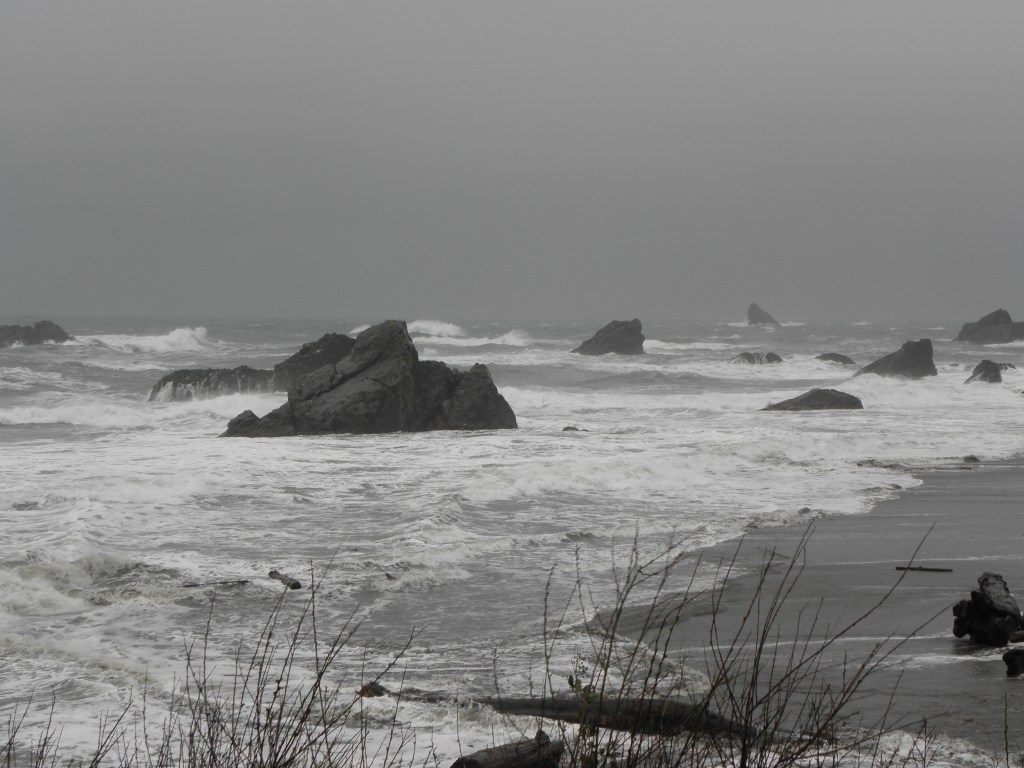
A cold winters day along the Oregon coast.

Where the Winds Roar

Where the winds roar through the branches of the Sitka Spruce that runs along the coastline of the Pacific Ocean, the constant and seemingly endless falling of raindrops, the hail pounding on the roof of my tent where no other sounds can be heard.

Where the ocean’s untamed surf crashes against the erect and jagged rock monuments—the guarding sentries of the coastline that rises from the ocean floor.

Where the swift surge of the wild sea erodes away the cliff’s lines in natures course.

Where the roaring thunder announces its presence in the clouds above and beyond to the distant horizon, where the clouds and ocean meets and blends into one another in a gray void.

Where the presence of never-ending clouds threatening more wind, more rain, and more hail, never showing the possibility of the daylight and warmth of the sun nor the blue sky—only teasing us that there might be more than a brief glimpse of hope–hoping, hoping, please no more rain.

And then, in a moment of delight, the winds, rain, and hail have ceased to exist, replacing this winter storm with blue skies and sun giving us a refreshed insight and calm with the lull of the ocean—soothing our soul.

Where the birds once again rejoice in song as a new morning, a new day begins.

A brief moment to behold until the next storm comes to visit.

Where the cold air, and brisk breeze of winter can still be felt. And a constant reminder that nature is running the show.

~ Rick Theile

Standard
Miscellaneous Writings, and Thoughts of The Day

Silent Voices

Silent Voices

The silent voices are those voices we choose not to hear. They are the cries, the prayers, the ceremonies for healing, the horrors and the atrocities of indigenous peoples and their cultures all around the world who have been ignored, shunned and demonized by the rest of the world because they believe and choose to live their ancient traditional ways. For many indigenous peoples, their lands, their traditions, their cultures, their ceremonies, their languages taken away and strip them of their very souls – stolen by outsiders. When their sacred lands are forever violated by others, no one cares or listens when they try to speak for their lands and what makes them who they are. The governments and churches have tried to silence their voices by forces assimilation, punishment, death and genocide. One famous saying in America was, “Kill The Indian, Save The Man.” How barbaric is such an idea? Who gives anyone such a right against another culture or people? As Americans we were taught about democracy and the rights for all men and yet we did to the Native People what Hitler did to the Jews and worse. Hitler, a man most despised for his brutality against the Jews and Gypsies by most people in the world has forgotten that this very thing Hitler had done, has been done to indigenous peoples throughout the world by our governments and the Christian church. Hitler got the idea of concentration camps from America – reading about the Indian Reservations. In fairly recent times, multi-national corporations have contributed to the brutality of indigenous peoples. Even when we are aware of it now through the information on the internet or from human rights groups who want to protect the rights of these peoples, we still choose to cover our ears, to ignore their voices. We call ourselves civilized and yet we continue to commit these atrocities against innocent people. Our governments cry to its people that we must fight terrorism, when in reality, we are the terrorist.

What will it take for us to wake up and treat all peoples equally? What will it take to realize human lives are more important than progress or materialism? These Silent Voices are important  for our very survival as a peoples because we can learn valuable teachings from these people and cultures. We, the modern day societies have become so disconnected from the very things that give us life – our true connection with all life.

Today, indigenous peoples all around the world have come together to sow an alliance to protect Mother Earth, sacred lands and to protect their cultures and traditions for their children. Some are beginning to listen to them, but most are still blind to the crimes against these peoples and to their ways of life. I do not understand this.

Standard
Miscellaneous Writings, and Thoughts of The Day, Uncategorized

THE PEOPLE OF THE LAND

When I think of Canada, I imagine her majestic mountains, her pristine glacial fed lakes, her flowing rivers, her lush green untouched boreal forests stretching across the land and the Northern Lights dancing in the winter night skies. I think about her abundant wildlife and the pure wildness of the land. It is a land I see myself connecting once again with nature. From my early memories I dreamed of riding the Canadian trails on horseback, canoeing the abundant lakes and rivers, and walking the woodlands for wildlife. And one cannot forget about the original peoples of Canada – the First Nations, who’s traditions, cultures and ways of life spurs the imaginations of so many who dream of living with the land as the First Nations have for thousands of years.
Archie Belaney (Grey Owl) was one such person from England and dreamed of living with the Indians of Canada. His dream was fulfilled and eventually became a spokesman for the beaver and conservation. His love and connection with the land was learned from his stay with the Ojibwe People.
I think for the dreamers who dreams of the wilderness, a part of this experience would be to live with the aboriginal people of the land because they know and have the knowledge of the rhythms and flow of nature and our relationship with her. These traditional peoples makes up what Canada truly is. Like the grizzly bear, the black bear, the caribou, the moose, the beaver, the eagles and all that is Canada, so are the First Nations, Canada – as the Native Americans are America, The Native Hawaiians are Hawaii, the Maori are New Zealand, the Australian Aboriginal are Australia and the list continues with all indigenous peoples and their home lands.
Since Europeans arrival in North America, a steady decline has occurred to the original peoples and their traditions through disease, war, genocide, forced assimilation and the taking of their lands. And even today, there is a silent genocide occurring against these indigenous peoples that the majority of people who occupy their lands choose to blindly ignore.
In Northern Alberta in the Athabasca Lake region above the Alberta Tar Sands mines there are First Nations communities consisting of Athabasca Chipewyan, Cree and Metis peoples. These peoples who have been in the region for over 10,000 years and have lived traditionally from the land are still getting their food from Athabasca Lake, Athabasca River and from the forest. Their drinking water also comes from the lake and river. This area was once pristine until the Tar Sands began polluting the river and lake with toxic sludge consisting of high levels of lead, mercury and other toxins and high levels of arsenic in the air. It was soon after high rates of cancer were developing within the Native community. As mentioned, these communities relied on the natural resources for sustenance. Meat from game animals, drinking water and fish from the lakes and rivers, waterfowl, as with other game. They also relied on plants for food and medicines. The toxic poisons from the Tar Sands are in the air, land, water and in the animals, fish and plants, so the people of these communities are being exposed to these toxins daily and in everything they consumed. The oil companies and government are not taking any responsibility for this toxic pollution nor the illnesses and deaths attributed to the high levels of toxins in the environment caused by the Tar Sands. More development and expansion are planned for the Tar Sands that will wipe out these Native communities that have been there for over 10,000 years and making the once pristine waterways, lakes and forests, waste lands, scaring this fragile ecosystem for many years to come.
This is not an isolated event, it is happening in other parts of Canada, in America, impacting the Native Americans, in Hawaii, in Australia, South America, in Africa, and in the rest of the world impacting the indigenous communities who have no voice. Multinational corporations from the oil, gas, mining, logging and chemical industries are killing people, devastating their communities, their cultures and destroying the environment and it seems the rest of the world does not care. These are crimes against humanity by governments and corporations and we better start caring because it could happen to us.
Standard